AR Effect Production — Effect House
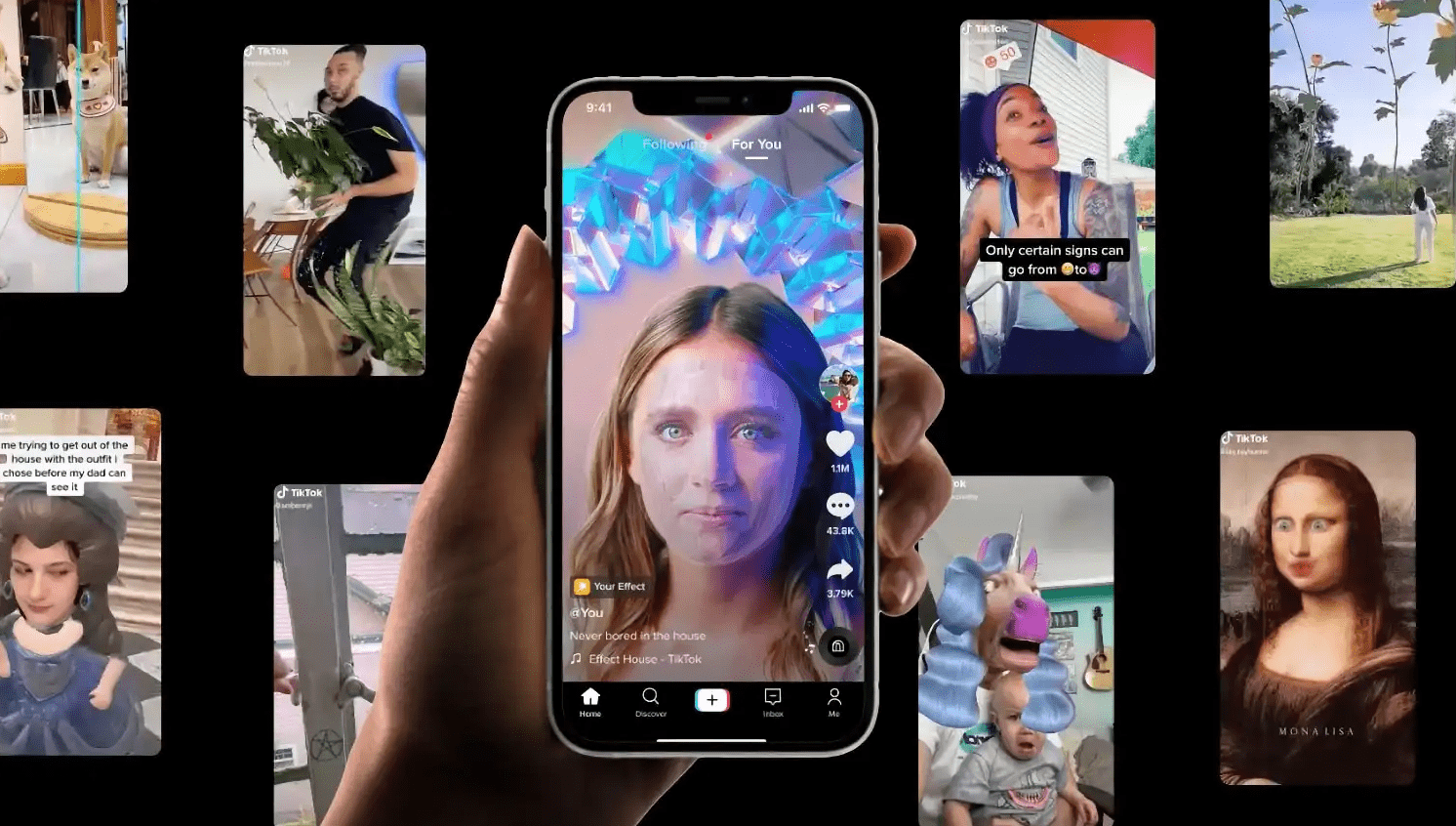
Embedded technical artist on rotating production pods at TikTok Effect House — the sole TA per pod, working alongside fellow technical artists across the wider team. Owned the technical implementation of AR effects end-to-end on each pod — translating the PM and creative team's vision into shippable Lua / TypeScript / shader code on TikTok's internal AR engine. Over two and a half years, shipped 50+ effects spanning shader R&D, ML-driven transformations, branded campaigns, and game mechanics — reaching audiences from hundreds of thousands to multi-millions per effect.
Production Model
Each production cycle (~monthly cadence) assembled a fresh pod: product manager, 2D/3D artists, QA, and one technical artist — me, for the effects on my pods. I owned every line of effect logic and shader code on those effects, working tightly with the artists on look-dev and the PM on creator and platform constraints. Most effects shipped end-to-end through Effect House's internal AR runtime; a subset routed through server-side ML inference for image-to-image transformations.
Technical Scope
- Shader R&D — authored single- and multi-pass shaders for stylised look-dev, distortion, and post-processing chains.
- 3D math — vector / matrix work for tracking, world-space placement, and procedural animation tied to facial landmarks and device IMU.
- Object segmentation — leveraged on-device ML segmentation (face, hair, body, scene) to drive selective transformations and compositing.
- Server-rendered ML effects — designed the round trip where the client captures the user's input image, transmits it to a model inference endpoint, and composites the returned result back into the live AR scene.
- GAN-driven transformations — facial aging / regression and stylised identity transforms (vampire, supernatural variants) via pretrained generative adversarial networks; coordinated client-side preprocessing with server-side inference.
- Game mechanics — physics-driven gameplay logic, scoring, and state machines for gamified effects with progression systems.
Branded Partnerships
- DreamWorks — Puss in Boots: The Last Wish — worked directly with the DreamWorks team to ship a promotional AR effect timed to the film's release.
- The Met Gala 2024 — shipped a custom AR effect for the Met Gala campaign in coordination with the brand team on art direction and visual fidelity.
Featured Effect — The Met Gala 2024
Branded effect built in partnership with the Met Gala campaign team. Users point their camera at the ground to spawn a swarm of butterflies that flock naturally around the scene, complemented by glittering particle accents.
Techniques used:
- AR plane detection — world-space horizontal-plane tracking to lock content to the detected ground plane.
- Boids-style flocking — Reynolds boids algorithm (separation, alignment, cohesion) for emergent butterfly swarm behaviour.
- Particle systems — layered emitters for sparkle, dust, and ambient glow accents.
- Custom scripting — orchestrated trigger timing, plane-anchor lifecycle, and interaction logic across the effect's full runtime.
Selected Effects
Reach & Impact
- 50+ effects shipped across organic and branded campaigns.
- Reached 10M+ users globally; top effects drove multi-million view counts.
- DRI for new-capability effect production — coordinated with the other technical artists on the team to scope what new effect types, directions, and technologies the team would pioneer next.
Creator Community & Internal Leadership
- Effect House Open House — co-wrote and presented the Engineering session "Sneak Peek into Effect House"; sourced and recorded the effect demos featured on stage; gave editorial notes to the production team.
- Material Graph Challenge — organised and ran a cross-team challenge for the US + CN orgs to validate the Material Graph release. 30 participants across IEs, designers, and RDs surfaced 15 bugs and 28 feature requests; ran live support throughout.
- Documentation & templates — authored the Advanced Procedural Terrain TTEH template and the UV Transforms in TTEH documentation for the Material Graph Learning Resources hub.
- Live tutorials — presented the PCG Terrain Material Graph live on YouTube and again at the TTEH Ambassador sharing for the Material Graph release.
- Conference representation — repped the team at GDC, SIGGRAPH, and Adobe Max (booth host + live Effect House demos for visitors).
- Creator-facing content — produced five TikToks for the official Effect House account; top video reached 1.1M views.
- Community support — answered creator questions in the Effect House Discord and community forum; volunteered in TTEH bug bashes.
- AIGC Hackathon — proposed the AI Fashion concept (segmenting GAN-generated apparel onto the user's body), designed the prompt structure, and implemented the segmentation + compositing pipeline as a 3-person team.